Procedure
BOAS Airway Surgery for Bulldogs: Stenotic Nares and Soft Palate Procedures
BOAS surgery — the surgical side of brachycephalic obstructive airway syndrome (BOAS) — most often means one or both of two procedures: widening stenotic nares and shortening an elongated soft palate. This page covers that procedural detail for English Bulldogs, French Bulldogs, and Pugs in Santa Monica and Los Angeles: which structures may be treated, how candidacy is assessed, and what to expect around anesthesia, risks, and recovery. Syndrome-level signs and broader planning belong on the BOAS evaluation hub; this page stays on the procedures themselves.
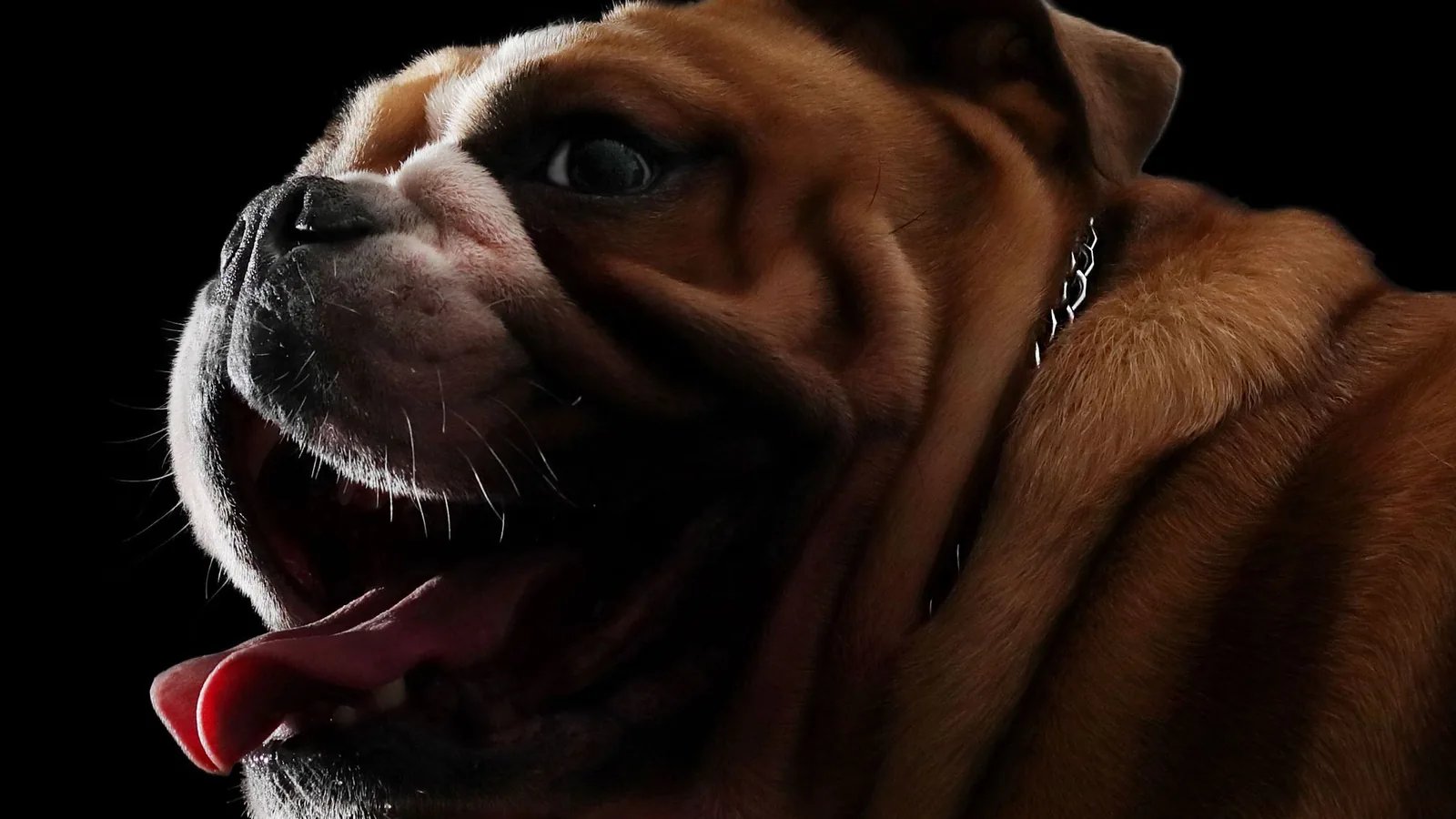
- Focus here is stenotic nares surgery and soft palate surgery — including alarplasty, wedge resection, and nostril widening — not a full BOAS overview.
- Candidacy, anesthesia planning, risks, limitations, and recovery are reviewed before any recommendation.
- Outcomes depend on anatomy, age, weight, severity, diagnostics and anesthetic risk; no outcome is guaranteed.
If you still need the broader picture of signs, sleep, heat intolerance, and diagnostic planning, read understanding brachycephalic airway syndrome first. This page assumes that conversation and goes deeper on procedures.
Candidacy and evaluation before a procedure
Soft palate and stenotic nares procedures are considered only after examination. History, body condition, breathing effort, sleep observations, concurrent airway findings, and anesthetic risk shape whether surgery is appropriate. Some dogs benefit from medical and lifestyle measures without a procedure; others may be candidates for nares surgery, soft palate surgery, or both under one carefully planned anesthetic event.
Stenotic nares surgery
Narrow nares can reduce airflow through the nasal passages. Surgical widening — often called alarplasty or wedge resection for nostril widening, and sometimes described by owners as rhinoplasty or nose surgery — may improve nasal airflow in selected patients. The procedure is typically performed under general anesthesia and is often considered alongside soft palate evaluation when relevant.
Some owners also say “nose operation” or “nose job” in everyday conversation. Those are colloquial labels for veterinary procedures that still require examination, candidacy review, and informed consent — they are not cosmetic nicknames that replace clinical judgment.
External nostril shape is only one part of airway assessment. Similar-looking nostrils can be associated with different functional signs, and a photograph cannot establish candidacy or predict outcome.
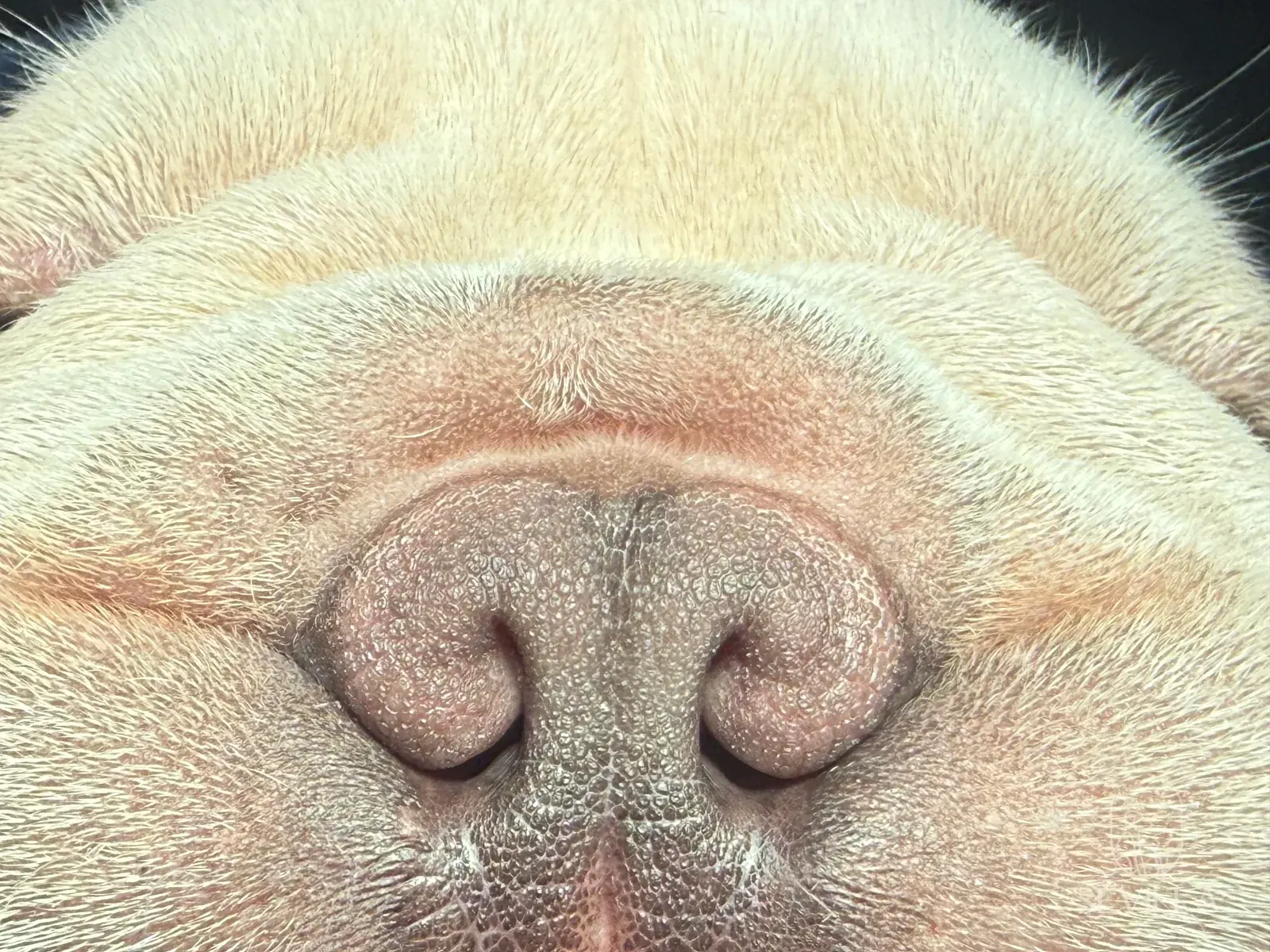
Front-on clinical close-up of a cream-colored Bulldog nose with slit-like external nostril openings. Educational example of externally narrowed nostrils supplied from Dr. Pedraza Dropbox clinical media.
Clinical educational image. Contains oral or surgical photographs. Reveal only if you want to view them.
Frontal clinical photograph of a light-colored Bulldog muzzle under anesthesia with an endotracheal tube visible. Both nostril openings show recent sutures and a small amount of blood. Educational postoperative nostril anatomy example from Dr. Pedraza Dropbox.
Alarplasty and wedge resection: what the names mean
Alarplasty and wedge resection are the terms most often used for nostril-widening techniques. They differ in how tissue at the nostril opening is removed or reshaped to enlarge the airway entrance. The choice between approaches is anatomical: it is made after examining the individual dog, not from photographs or breed alone.
Owners searching for Pug rhinoplasty, dog nose surgery or a nose job are usually describing these same functional procedures. The syndrome-level picture — why nostrils are only one part of the airway — is covered on the BOAS surgery and treatment page.
Soft palate surgery
An elongated soft palate can partially obstruct the upper airway. Soft palate resection or shortening aims to reduce the length and, depending on the technique, the thickness of the palate so that airflow may be less restricted. The specific technique is chosen after examination.
Technique, recovery and the change in breathing depend on the individual airway, severity, concurrent changes and anesthetic risk. No outcome is guaranteed, and soft palate surgery does not cure every aspect of brachycephalic airway disease on its own.
Clinical educational image. Contains oral or surgical photographs. Reveal only if you want to view them.
Top-down intraoperative view into an anesthetized dog's open mouth with gloved hands and instruments holding soft-palate tissue at the back of the throat. Blue surgical drapes frame the field. Educational soft-palate anatomy from Dr. Pedraza Dropbox.
Clinical educational image. Contains oral or surgical photographs. Reveal only if you want to view them.
Close intraoperative/postoperative view of the oral cavity focusing on the soft palate with dark sutures along the tissue margin and a clear endotracheal tube with a blue stripe. Educational soft-palate surgical anatomy from Dr. Pedraza Dropbox.
Anesthesia planning for brachycephalic airway surgery
Brachycephalic-specific anesthesia planning includes attention to pre-medication, induction, intubation, monitoring and post-extubation recovery position. We explain these steps and the relevant risks before any procedure. Exact protocols are individualized and are not promised as a fixed recipe on this page.
Risks and limitations
Families should understand that airway surgery carries anesthetic and surgical risk, possible temporary swelling or noisy breathing, incomplete improvement, and the need for ongoing lifestyle management. No technique is always superior. Active breathing distress, collapse, blue or gray gums or tongue, severe heat distress, or rapid deterioration need urgent veterinary care — not an online consultation form.
Recovery and follow-up after airway surgery
- Quiet activity for the first weeks, with restrictions individualized
- Soft food guidance and feeding modifications when appropriate
- Planned rechecks; immediate call back if breathing changes
- Continued weight and heat management after healing
What happens on the day
Surgical drop-off is scheduled Monday to Friday between 8:00 and 9:00 AM at Sevilla Veterinary Hospital in Santa Monica. The anesthetic plan is reviewed with you before the procedure, and in selected patients with both narrow nares and an elongated soft palate, addressing both in one anesthetic event may be appropriate. At-home care and what to watch for are reviewed with you at discharge.
Recovery expectations
- Quiet activity for the first weeks, with restrictions individualized
- Soft food guidance and feeding modifications when appropriate
- Planned rechecks; immediate call back if breathing changes
Realistic outcomes
Many dogs may breathe more comfortably after appropriately selected surgery, but no procedure is risk-free and no outcome is guaranteed. Surgery is one part of a plan that often includes weight management and lifestyle changes. Return to complete BOAS evaluation for syndrome-level planning, Dr. Pedraza and the clinical team, or contact to request a non-emergency consultation.
Referring veterinarians coordinating shared airway cases can also use the contact path for case discussion when appropriate.
Frequently asked questions
How is candidacy for soft palate or nares surgery assessed?
Candidacy is decided after examination and discussion of history, severity of signs, weight, age, concurrent airway findings, and anesthetic risk. Imaging or sedated airway examination may be appropriate in some patients. Photographs alone cannot establish candidacy.
Is stenotic nares surgery always necessary?
No. Narrow nostrils are common in English Bulldogs, French Bulldogs, and Pugs, and not every dog with them needs surgery. Widening is usually discussed when the narrowing is moderate to severe, particularly in a young dog, because opening the nostrils early may help limit secondary airway changes over time. It is also considered when there are signs such as noisy or open-mouth breathing at rest, poor exercise or heat tolerance, snoring or disturbed sleep, or when other airway procedures are already planned. Mild narrowing without signs may be monitored. The recommendation is made after examination, not from the look of the nose alone.
What is the difference between alarplasty, wedge resection, and nostril widening?
These terms describe approaches that may widen stenotic nares. Alarplasty and wedge resection are common veterinary labels for nostril-widening techniques. The choice depends on anatomy and surgical judgment after examination — not on a preferred marketing name.
Is stenotic nares surgery the same as rhinoplasty or nose surgery?
Many owners use rhinoplasty or nose surgery when they mean surgical widening of stenotic nares. Whatever the label, technique and candidacy are decided after examination. Colloquial phrases such as nose operation or nose job are informal owner language for procedures that still require veterinary evaluation.
Are both procedures usually done together?
In selected patients with both narrow nares and an elongated soft palate, addressing both in one anesthetic event may be appropriate. The decision is individualized and is not automatic for every English Bulldog, French Bulldog, or Pug.
What risks and limitations should families understand?
General anesthesia, bleeding, swelling, temporary worsening of noise or effort, aspiration risk, and incomplete improvement are among the considerations discussed before surgery. No technique is always superior, and no procedure removes every BOAS-related risk or guarantees a specific outcome.
What does recovery and follow-up look like?
Recovery is individualized. Many dogs need careful activity restriction, soft-food guidance, and planned rechecks during the first weeks. Call promptly for breathing changes. This consultation path is not an emergency service — active distress needs urgent in-person care.
How much does soft palate or stenotic nares surgery cost?
Cost depends on what the examination finds: which procedures are appropriate, anesthetic planning for the individual dog, and any diagnostics needed first. Rather than quoting a number from a photograph, we examine the dog and discuss an individualized estimate at the consultation.
Do you see Pugs and other breeds for nares or palate surgery?
Yes. English Bulldogs and French Bulldogs are the most common patients, and Pugs and other brachycephalic breeds are evaluated with the same examination-first approach.
Related educational resources
These articles answer common owner questions. They do not replace examination or the consultation details on this service page.
Educational references
External sources are linked for further reading. We do not reproduce their text.
Educational information · Soft palate / nares surgery. This page does not replace an examination, diagnosis or case-specific treatment plan from a veterinarian.
Ready to plan your bulldog's care?
Request a consultation and our team will follow up to schedule and review records.