Service · Bulldog key-hole surgery
Key-Hole Surgery & Laparoscopy for Bulldogs in Los Angeles
Key-hole surgery — also called laparoscopy — uses small incisions and ports with a camera to perform certain abdominal procedures. This page focuses on breed-aware evaluation for Bulldogs and French Bulldogs in Los Angeles, not on generic veterinary laparoscopy listings for all pets.
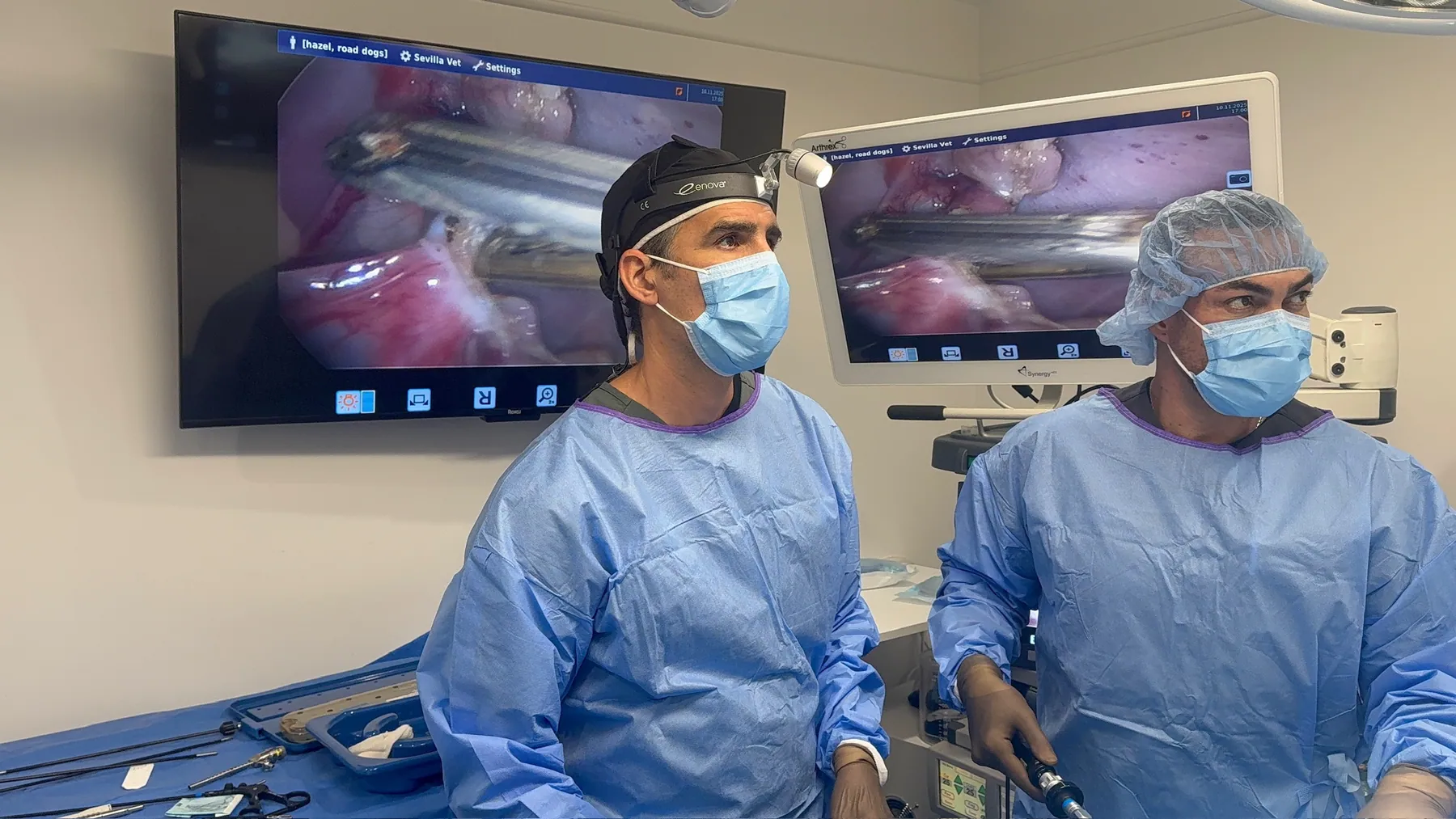
- Laparoscopy uses small ports and a camera rather than a single large open incision when that approach fits the procedure and the patient.
- Confirmed discussions include laparoscopic spay, laparoscopic cryptorchid neuter (often what families mean by keyhole neutering), and laparoscopic biopsy.
- Smaller incisions do not eliminate risk; open surgery may still be necessary; outcomes depend on anatomy, procedure, and anesthetic planning.
What key-hole surgery means here
Laparoscopy is a minimally invasive abdominal approach that may be considered for selected procedures after examination. On this Bulldog-focused site, the emphasis is patient selection, brachycephalic anesthesia considerations, and honest discussion of limitations — not claiming ownership of every veterinary laparoscopy search in Los Angeles.
Confirmed laparoscopic procedures we discuss
- Laparoscopic spay — ovariectomy performed through small ports rather than an open incision, when appropriate after evaluation.
- Laparoscopic (cryptorchid) neuter — locating and removing an abdominally retained testicle through small ports when appropriate. Owners often describe this as keyhole neutering; we clarify what that phrase means in the context of a laparoscopic cryptorchid neuter and whether it fits the individual patient.
- Laparoscopic biopsy — targeted sampling of liver, pancreas, or other abdominal organs through small incisions when imaging and examination support that plan.
Procedures beyond this confirmed list are not advertised here without clinical confirmation.
Patient evaluation and brachycephalic anesthesia
Evaluation typically includes history, examination, and any records your primary veterinarian shares. Weight, airway status, and prior breathing concerns matter for Bulldogs and French Bulldogs. When airway signs are present, we may also discuss the BOAS and airway evaluation pathway. Anesthetic planning is individualized; a laparoscopic approach is only one part of that plan.
Surgical environment
The prepared operating room below shows equipment context only. It is not a depiction of a specific laparoscopic procedure or a promised outcome.
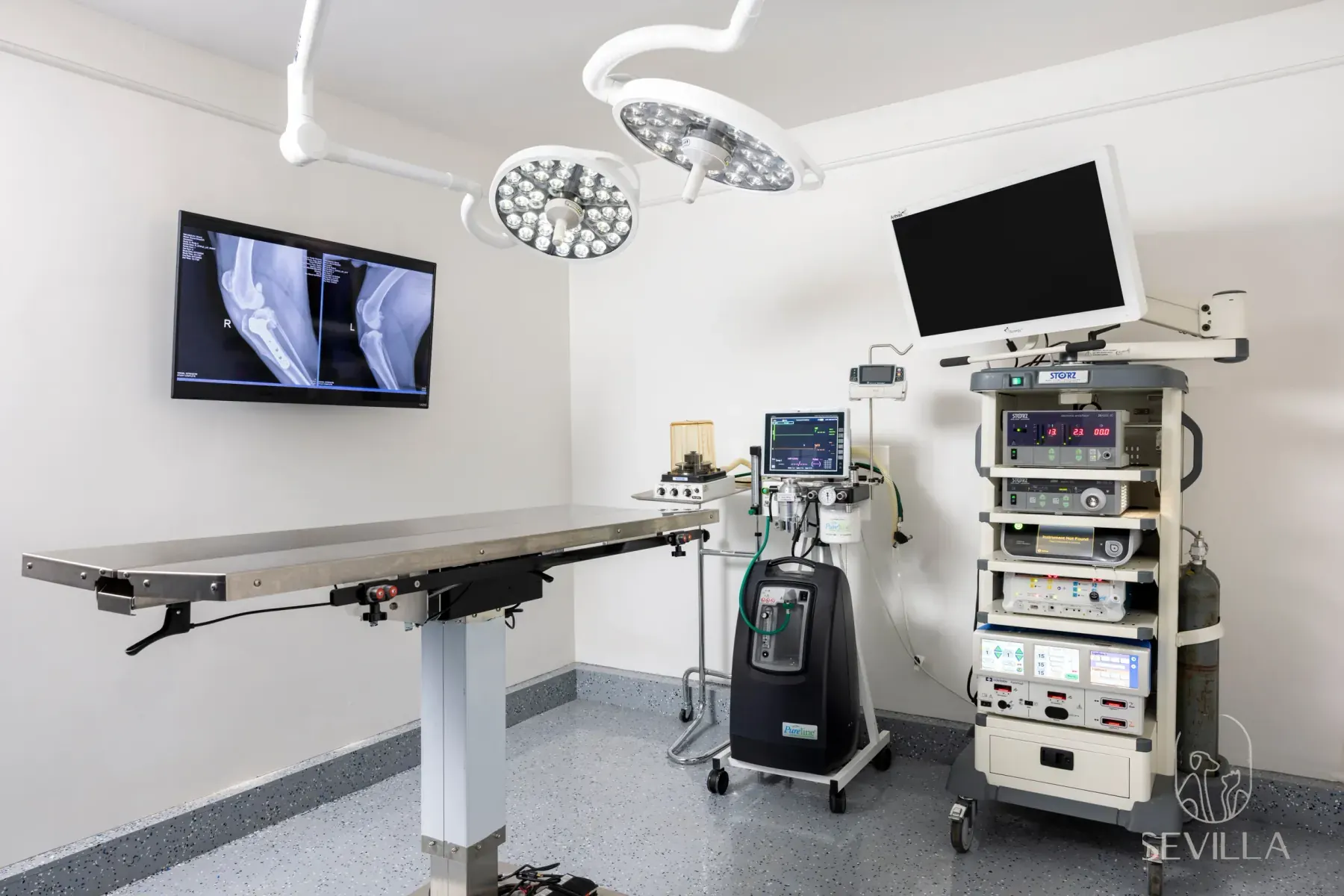
Wide view of a clean operating room with a stainless table, ceiling surgical lights, anesthesia equipment and wall monitors. No patient or open procedure is shown.
Potential benefits and limitations
In selected patients, a laparoscopic approach may allow smaller incisions compared with traditional open surgery and, depending on the case, a different recovery experience. Limitations matter equally:
- Not every abdominal procedure is appropriate for laparoscopy
- Patient size, anatomy, and anesthetic risk influence candidacy
- Conversion to an open approach may be required for safety
- A smaller incision is not the same as absence of risk
Recovery expectations
Recovery depends on the procedure performed, the individual dog, and home care instructions. We discuss activity restriction, incision monitoring, and follow-up after a plan is chosen — without promising a fixed timeline for every Bulldog.
Consultation and referrals
Families can request a Bulldog consultation and share records when available. Veterinarians referring a case can use the referral information for veterinarians. Learn more about Dr. Antonio Pedraza and the clinical approach. Diagnostic endoscopy may be discussed separately when GI or airway scoping is relevant.
Broader laparoscopy information
For general procedure and technology context beyond Bulldog-specific evaluation, see broader veterinary laparoscopy services at Los Angeles Laparoscopy Vet. That sister site covers generic minimally invasive topics; this page stays focused on Bulldog and French Bulldog consultation and planning at Sevilla Veterinary Hospital.
Frequently asked questions
What is key-hole surgery?
Key-hole surgery, also called laparoscopy, uses small incisions and ports with a camera to perform certain abdominal procedures. It is not appropriate for every procedure or every dog.
What does keyhole neutering mean?
Families sometimes use the phrase keyhole neutering when discussing a laparoscopic approach to neutering — including locating and removing an abdominally retained (cryptorchid) testicle through small ports when that approach is appropriate after evaluation.
What laparoscopic procedures may be discussed for Bulldogs?
Confirmed topics discussed on this page include laparoscopic spay, laparoscopic cryptorchid neuter, and laparoscopic biopsy of selected abdominal organs. Suitability is decided after examination and planning.
Is laparoscopy always better than open surgery?
No. Each technique has trade-offs. Smaller incisions do not mean absence of risk. In some patients the team may need to convert to an open approach for safety. Options are discussed after evaluating the patient and the planned procedure.
How does Bulldog anesthesia planning fit in?
Brachycephalic patients need individualized anesthetic planning. Airway anatomy, weight, and overall health influence whether a laparoscopic approach is considered and how recovery is supported.
Related educational resources
These articles answer common owner questions. They do not replace examination or the consultation details on this service page.
Educational information · Key-hole / laparoscopy. This page does not replace an examination, diagnosis or case-specific treatment plan from a veterinarian.
Ready to plan your bulldog's care?
Request a consultation and our team will follow up to schedule and review records.