Service
Bulldog Eye Surgery in Los Angeles: Cherry Eye & Eye Conditions
Bulldogs have more eye problems than almost any other breed, and most of them come down to anatomy: a shallow orbit, heavy facial folds, loose eyelid attachments and a prominent third eyelid. That is why English Bulldogs and French Bulldogs get cherry eye, entropion and corneal irritation so often, and why a pink mass or a squint in a bulldog deserves an examination rather than a wait-and-see. This page explains what each condition looks like, how Dr. Antonio Pedraza evaluates the eye in Santa Monica, and when medical care, surgical planning or urgent attention is appropriate.
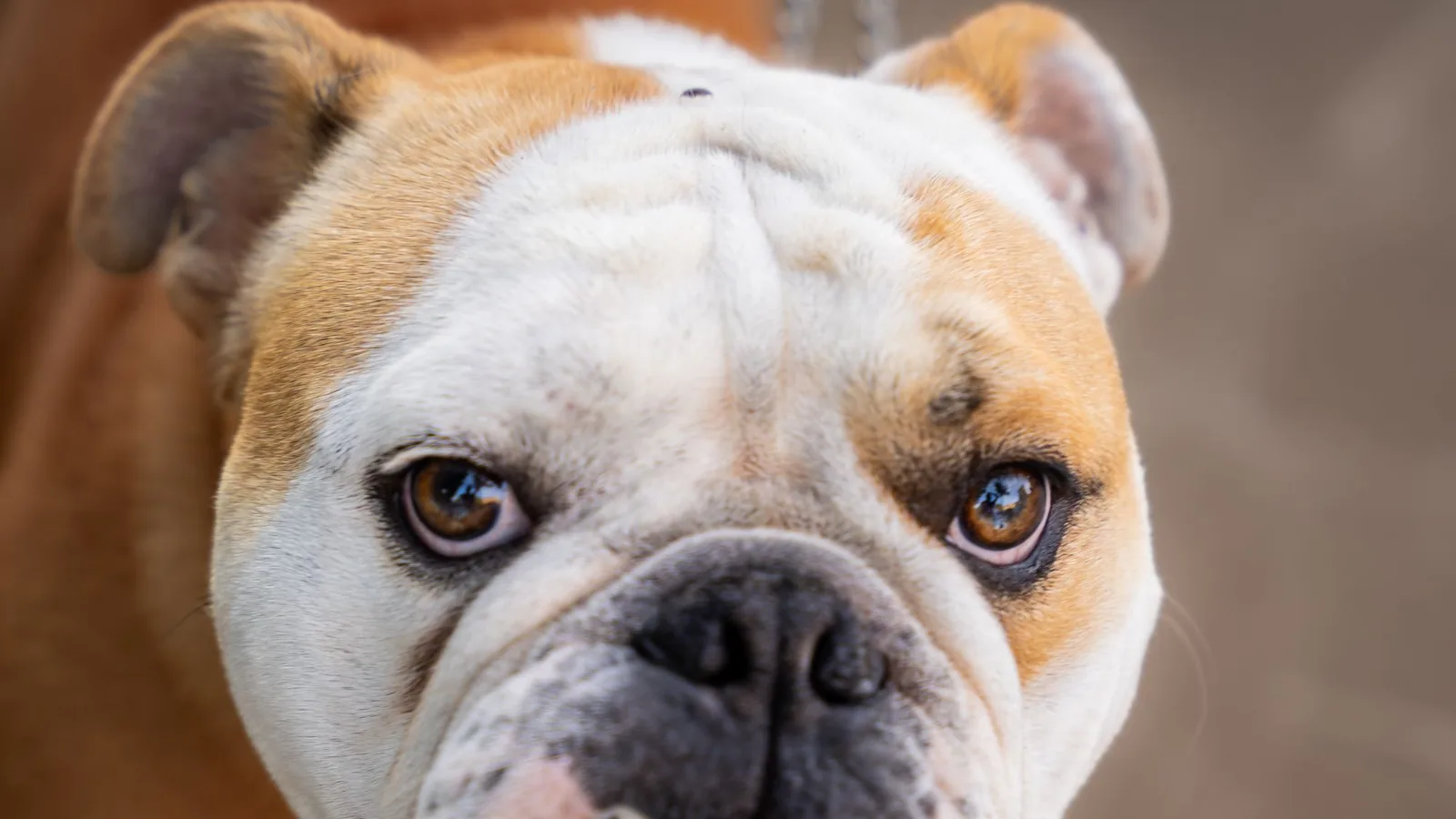
- Cherry eye is a prolapsed third-eyelid tear gland; in bulldogs it is treated by putting the gland back, not removing it.
- Entropion is an eyelid that rolls inward; hair on the cornea is the reason to examine sooner rather than later.
- Photographs cannot confirm a diagnosis or a surgical plan; examination of both eyes comes first.
- Outcomes depend on anatomy, age, weight, severity, diagnostics and anesthetic risk.
Use this page for the broader picture of Bulldog eye conditions and evaluation. When you need procedure-depth on a prolapsed third-eyelid gland or inward-rolling eyelids, continue to the dedicated pages linked below.
A clean exam room with a stainless steel table covered in white paper, teal drawers, wood wall paneling and a Sevilla logo mark. No patient or procedure is shown.
Eye signs that deserve attention
Owners often notice squinting, redness, tearing or mucoid discharge, pawing or rubbing at the face, a pink mass at the inner corner, or lids that look rolled inward. Any of these can reflect different problems — from a prolapsed third-eyelid gland to eyelid conformation issues or corneal surface irritation. Severity cannot be judged from a single photo.
Bring short videos and a timeline of when signs started when you can. Share whether rubbing, discharge, or discomfort is new or progressive. That history helps the examination without replacing it.
Urgent warning signs
Seek prompt or urgent veterinary care for severe eye pain, sudden squinting, inability to open the eye, cloudiness, a bluish appearance of the cornea, visible injury, active bleeding, rapid swelling, sudden vision concern, significant trauma, or rapid clinical deterioration. Do not use the website consultation form as an emergency service.
What an eye examination may include
- History focused on onset, rubbing, discharge, and prior medications
- Examination of both eyes, lids, and third eyelids
- Tear testing and fluorescein staining when clinically appropriate
- Assessment of corneal comfort and eyelid conformation
- Discussion of medical options, monitoring, or surgical planning
- Anesthesia considerations for brachycephalic patients when a procedure is considered
Medical care versus surgical planning
Not every eye finding requires surgery. Some dogs benefit from medical management, protective measures, or a short period of monitoring after examination. Others may be candidates for surgery after the cornea, lids, and tear film are understood. Treatment options are individualized; no online checklist can decide for a specific dog.
Cherry eye and the third-eyelid gland
Cherry eye is the common name for prolapse of the tear gland of the third eyelid (nictitating membrane). In a bulldog it shows up as a smooth pink or red lump at the inner corner of the eye, often overnight and often in a young dog. The gland makes a significant share of the tear film, which is why, when surgery is appropriate, it is put back into position rather than removed.
Why bulldogs get it
The gland is normally held in place by a band of connective tissue at the base of the third eyelid. In English Bulldogs and French Bulldogs that attachment is often weak, and the breed's shallow orbit and prominent third eyelid leave little room for the gland when it swells. The result is a structure that pops out with a bout of rubbing, a rough play session or for no obvious reason at all. Because the weakness is in the anatomy, the other eye is at risk too, and both eyes are examined even when only one looks abnormal.
What it looks like, and what it is not
A cherry eye sits at the inner corner, is rounded and fleshy, and moves with the third eyelid. Redness across the whole white of the eye, a cloudy or blue cornea, an eye that bulges forward, or a swelling on the eyelid margin are different problems and, in a brachycephalic dog, more urgent ones. A bulldog can have cherry eye and entropion at the same time, so the eyelids are always assessed alongside the gland.
What happens if it is left alone
The exposed gland dries, thickens and produces more discharge. Rubbing follows, and rubbing in a bulldog with heavy folds and a flat face is how corneal scratches start. Over months the gland can become too inflamed to reposition neatly. That is the practical argument for an examination soon after the lump appears rather than waiting to see whether it settles.
How it is treated
Very new, mild prolapses are sometimes given a short course of medical management and a recheck. When the gland stays out or keeps returning, the treatment is surgical replacement: the gland is anchored back into place through a small pocket or suture technique so it keeps producing tears. Removal is not the plan for a bulldog because it raises the risk of dry eye for life. Recurrence is possible with any technique and is discussed before scheduling.
Owners searching for bulldog cherry eye mean this same condition whether they have an English Bulldog, a British Bulldog, a French Bulldog or a cross. For candidacy, gland-preservation counseling, anesthesia, recovery, and what drives the cost of the procedure, see cherry eye evaluation and gland-replacement surgery. French Bulldog owners who want to know what Frenchie cherry eye looks like in its early stage can read the Frenchie cherry eye guide.
Entropion and eyelid conformation
Entropion means an eyelid margin rolls inward so hair can contact the cornea. That contact may lead to squinting, tearing, and corneal irritation. In selected patients, surgical correction of eyelid position may be appropriate after examination. Technique depends on where the lid rolls and on the dog’s facial conformation — including folds that can press on the lids.
Corneal ulcer risk is a reason to examine sooner rather than waiting when hair is contacting the eye surface, without claiming every case will ulcerate. For candidacy, anesthesia, risks, and recovery detail, see entropion evaluation and eyelid surgery.
Corneal irritation in context
Redness, discharge, and rubbing can accompany cherry eye, entropion, or other surface disease. Fluorescein staining and a careful lid exam help separate irritation sources. A cloudy cornea or marked pain moves care toward urgent evaluation rather than a routine elective consult.
Anesthesia and surgical planning
When a procedure is considered, brachycephalic anesthesia planning includes airway-aware induction, monitoring, and recovery support. See our dental and anesthesia planning page for related context. Eye surgery planning also reviews whether one or both eyes may be addressed in a single anesthetic event — an individualized decision after examination.
Recovery overview
After selected eye procedures, families should expect activity limits, protective measures such as an e-collar when advised, topical medications for a defined period, and planned rechecks. Exact plans vary by procedure and by the individual dog.
Consultation and referring veterinarians
To request a non-emergency consultation, use contact. You can also read about Dr. Pedraza and the clinical team. When another clinic is coordinating care, the referring-veterinarian pathway explains how shared cases are typically handled.
For procedure-specific cherry eye depth, continue to procedure-specific cherry eye information. For inward-rolling lids, see procedure-specific entropion information.
Frequently asked questions
Which Bulldog eye problems are evaluated on this page?
This hub covers common conditions seen in Bulldogs and French Bulldogs — including cherry eye, entropion, eyelid and fold conformation issues, and related corneal irritation risk — and explains how examination guides medical or surgical planning.
When is an eye problem urgent?
Severe eye pain, sudden squinting, inability to open the eye, cloudiness, a bluish appearance, visible injury, active bleeding, rapid swelling, sudden vision concern, significant trauma, or rapid deterioration need prompt or urgent veterinary care. The online consultation form is not an emergency channel.
How do cherry eye and entropion relate to each other?
They are different conditions. Cherry eye involves a prolapsed third-eyelid gland; entropion is inward eyelid rolling that can irritate the cornea. Some dogs have both. Evaluation looks at the whole eye and eyelid picture before any procedure is planned.
Does every eye condition need surgery?
No. Some concerns are managed medically or monitored after examination. Surgery is discussed when findings suggest it may help a selected patient — never as an automatic next step from a photograph or online form.
Can cherry eye in a bulldog go away on its own?
Occasionally a freshly prolapsed gland slips back for a while, and some owners are told to massage it in. It usually comes back out, because the tissue that held the gland in place has stretched. A gland that stays out or keeps returning needs examination; the longer it sits exposed, the more irritated and swollen it becomes.
Is cherry eye painful for the dog?
Usually not painful at first, which is why many bulldogs seem unbothered. The exposed gland dries and swells over time, tearing and discharge increase, and rubbing can then damage the cornea. Discomfort that appears suddenly, with squinting or cloudiness, is a different picture and should be seen promptly.
Related educational resources
These articles answer common owner questions. They do not replace examination or the consultation details on this service page.
Educational references
External sources are linked for further reading. We do not reproduce their text.
Educational information · Eye. This page does not replace an examination, diagnosis or case-specific treatment plan from a veterinarian.
Ready to plan your bulldog's care?
Request a consultation and our team will follow up to schedule and review records.