Procedure · Bulldog & French Bulldog
Cherry Eye Evaluation and Gland-Replacement Surgery for Bulldogs in Los Angeles
This page is for families who need procedure-focused detail on a prolapsed third-eyelid gland: how cherry eye is evaluated, when gland-replacement surgery may be considered, and what gland preservation, recurrence, anesthesia, and recovery mean for Bulldogs and French Bulldogs in Los Angeles. For a wider view of eye signs and conditions, start with the Bulldog eye-surgery overview.
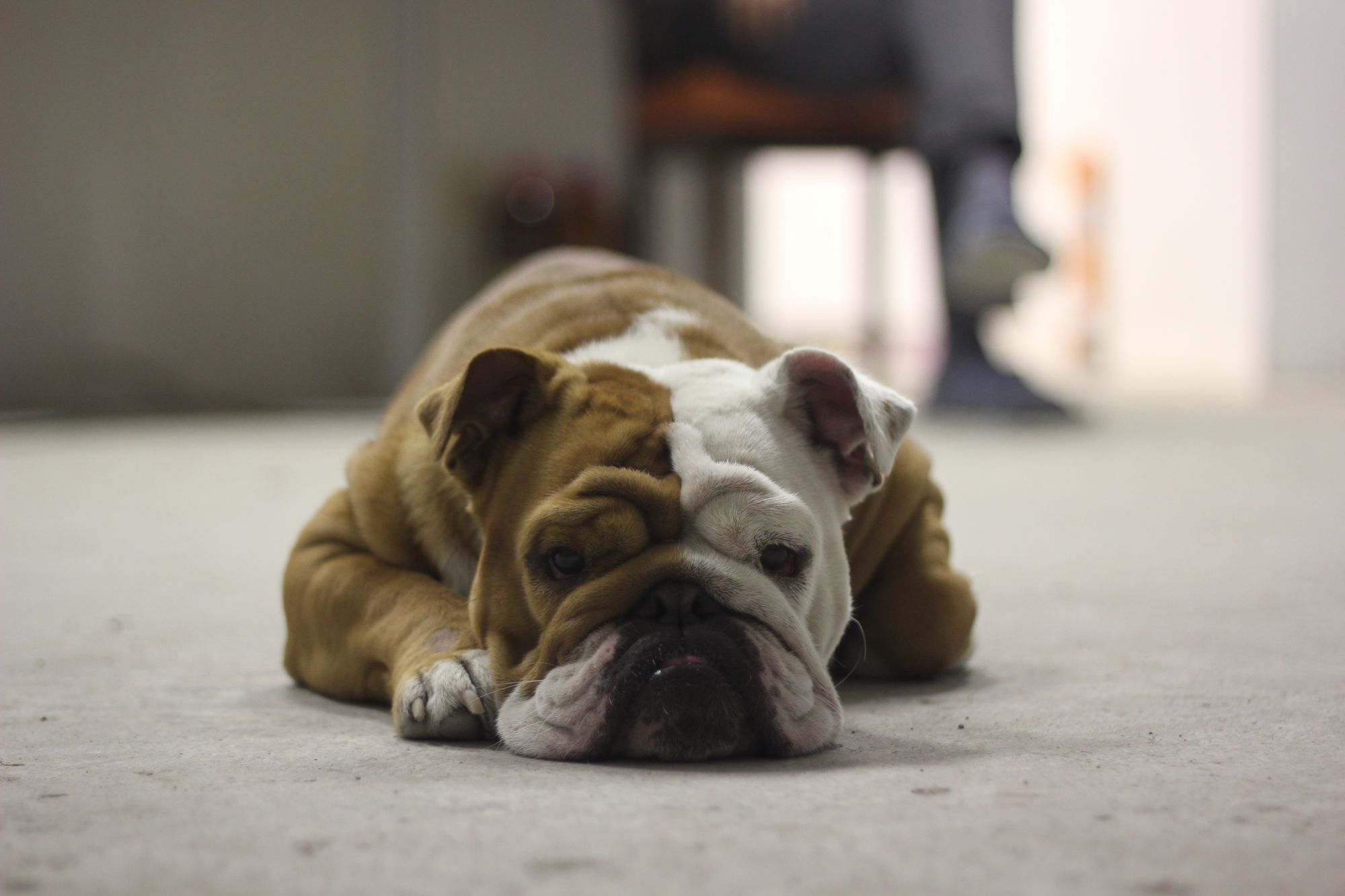
- Focus here is cherry eye surgery counseling — not a catalog of every eye disease.
- Gland replacement with gland preservation is the usual surgical discussion; removal is uncommon.
- Recurrence remains possible; photographs cannot confirm candidacy.
- Outcomes depend on anatomy, age, weight, severity, diagnostics and anesthetic risk.
Looking for broader Bulldog eye conditions first? Read the Bulldog eye-surgery overview before diving into gland replacement detail.
What structure is prolapsed?
Cherry eye names prolapse of the tear-producing gland of the third eyelid. It often appears as a pink or red lobed mass at the inner corner. The appearance can fluctuate early on, then stay out. English Bulldogs and French Bulldogs are over-represented among dogs that develop this problem, which is one reason breed-focused examination matters.
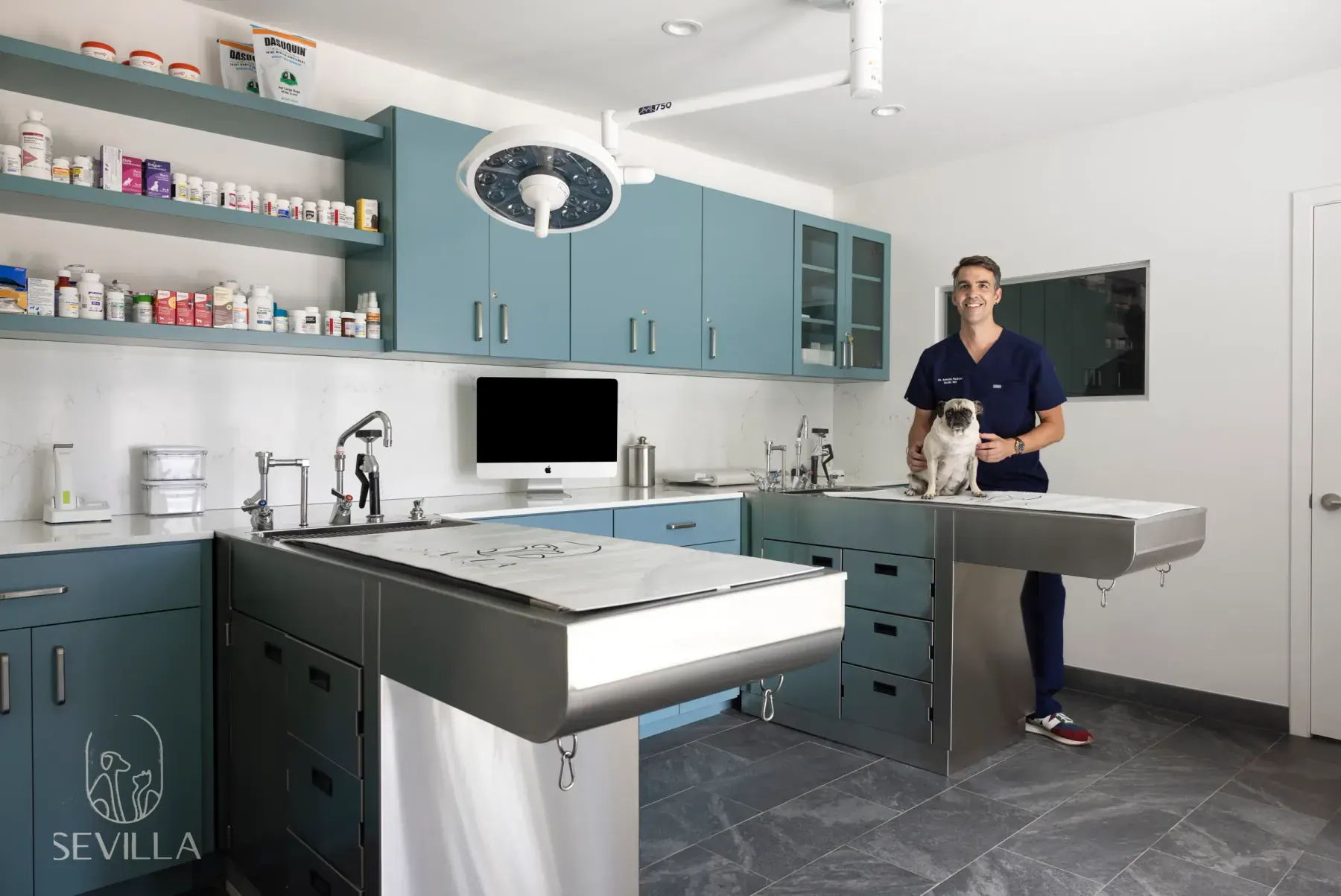
A clinician in navy scrubs stands behind a stainless exam table with a small light-colored dog facing the camera. Teal cabinetry and a ceiling surgical light are visible. No eye surgery is shown.
Signs families often notice
- A pink or red rounded mass at the inner corner of one or both eyes
- Mild rubbing or pawing, sometimes with little obvious pain
- Increased tearing or mild mucoid discharge
- An intermittent mass that seems to improve, then returns
What the veterinarian evaluates
A useful exam covers more than the visible mass. Eyelid conformation, early entropion screening, fold irritation, tear production testing when appropriate, and fluorescein staining of the cornea help place the prolapsed gland in context. Both eyes are checked even when only one side looks abnormal. Photographs help the history; they do not replace examination or establish surgical candidacy.
Gland replacement and gland preservation
When surgery is appropriate, counseling centers on replacing the gland in a more secure position rather than removing it. Gland preservation usually matters because the tissue contributes meaningfully to the tear film. Pocket and anchoring approaches are among the techniques discussed in veterinary ophthalmology; the choice depends on gland size, age, third-eyelid conformation, and concurrent lid findings after examination.
In selected mild or new-onset cases, short-term medical management and a recheck may come first. Surgery is not automatic the day a pink mass is noticed.
Risks, limitations, and recurrence
Eye surgery carries anesthetic and surgical risk. Swelling, irritation, and incomplete improvement can occur. Recurrence of cherry eye is possible after gland replacement; no technique guarantees a permanent result. Plans are revisited if the gland prolapses again.
Anesthesia, recovery, and follow-up
Brachycephalic anesthesia planning includes airway-aware induction, monitoring, and recovery positioning. Exact drug protocols are individualized and are not published as a fixed recipe here. See dental and anesthesia planning for related context.
- Protective collar (e-collar) until recheck when advised — often around 10–14 days
- Mild swelling or pink color of the third eyelid can be expected early
- Activity limits; avoid rough play, swimming, and face-rubbing
- Topical medications for a defined period, then planned follow-up
Cost factors (no fixed online price)
Estimates reflect whether one or both eyes are involved, the surgical approach, anesthesia, diagnostics, and any concurrent eyelid or corneal concerns. A written estimate after examination is more useful than a single website number.
Cherry eye consultation and references
Request a non-emergency visit through contact, learn more about Dr. Pedraza, or use the referring-veterinarian pathway when another clinic is coordinating care. Return to eye examination and surgical care for the wider condition set, or compare inward-rolling eyelid treatment when squinting and lid position are also concerns.
Frequently asked questions
Will my dog need surgery the first time cherry eye appears?
Not always. Some prolapsed glands reduce with short-term medical management, and examination comes before any recommendation. When the gland stays prolapsed or recurs, surgical gland replacement is often discussed.
What does gland replacement mean — and why preserve the gland?
Gland replacement repositions the prolapsed third-eyelid gland rather than removing it. Gland preservation usually matters because the tissue contributes to tear production; removal may increase long-term dry-eye risk and is rarely the first recommendation today.
Is removal ever discussed?
Removal is uncommon in modern plans. It is not accurate to say removal is always wrong in every circumstance worldwide, but for most Bulldog patients evaluated here, preserving and replacing the gland is the counseling focus after examination.
Can both eyes be involved?
Yes. Cherry eye may affect one eye or both, simultaneously or at different times. Both eyes are evaluated even when only one side looks abnormal.
Can the gland prolapse again after surgery?
Yes. Recurrence is possible with any technique. No procedure eliminates that risk. Realistic expectations are reviewed before scheduling.
How are cost factors discussed without a fixed online price?
Cost depends on whether one or both eyes are involved, technique, anesthesia, diagnostics, and concurrent eyelid or corneal findings. A written estimate is provided after examination rather than publishing a single figure that may not fit your dog.
Related educational resources
These articles answer common owner questions. They do not replace examination or the consultation details on this service page.
Educational references
External sources are linked for further reading. We do not reproduce their text.
Educational information · Eye. This page does not replace an examination, diagnosis or case-specific treatment plan from a veterinarian.
Ready to plan your bulldog's care?
Request a consultation and our team will follow up to schedule and review records.