Service · Bulldog endoscopy
Bulldog Endoscopy and Gastrointestinal Evaluation in Los Angeles
Endoscopy can help evaluate selected gastrointestinal concerns in Bulldogs and French Bulldogs — especially persistent vomiting or regurgitation — after history and examination. This page focuses on breed-aware GI evaluation in Los Angeles, not on generic internal-medicine marketing for all pets.
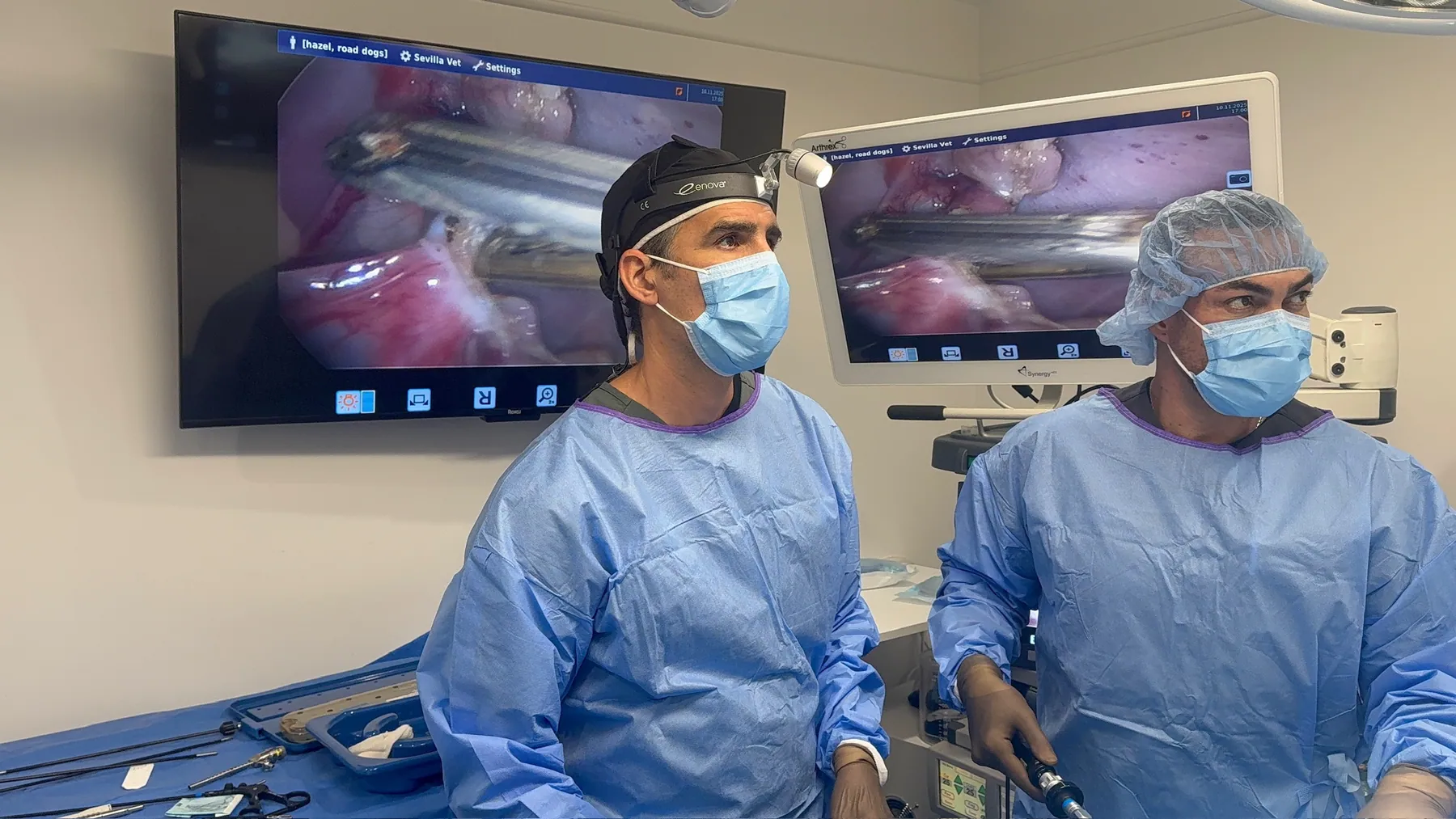
- Endoscopy may be considered after examination when chronic vomiting, regurgitation, or related GI questions need direct visualization or biopsies.
- It requires general anesthesia with brachycephalic-aware planning.
- Endoscopy does not diagnose every GI disease, does not replace imaging or lab work, and does not guarantee a finding or a cure.
Vomiting, regurgitation, and why history matters
Families often mix vomiting and regurgitation. Active heaving differs from passive return of food or fluid, and the distinction can change which diagnostics are most useful. A clear episode diary, diet history, and short videos — when available — help the veterinary team decide whether endoscopy belongs in the conversation. Educational detail for owners is on the vomiting and regurgitation guide.
What evaluation may include before endoscopy
Endoscopy is rarely the first step for every acute upset. Depending on the patient, the team may discuss examination findings, laboratory testing, and imaging before or alongside an endoscopic plan. The goal is to decide whether visualization or biopsies are likely to change management — not to promise a complete diagnosis from one procedure.
What endoscopy may help evaluate
- Persistent vomiting or regurgitation after appropriate initial evaluation
- Selected questions about the esophagus or stomach when clinically indicated
- Concern for foreign material in locations reachable by the endoscope
- Targeted mucosal sampling (biopsies) when tissue evaluation may help
- In some brachycephalic cases, coordinated discussion with airway evaluation when signs overlap — without turning this page into a second BOAS evaluation page
When airway and GI signs coexist
In some brachycephalic dogs, breathing effort and regurgitation patterns may be discussed together. That relationship is evaluated case by case. Airway surgery planning belongs on the BOAS pathway; this page stays centered on gastrointestinal and endoscopic evaluation.
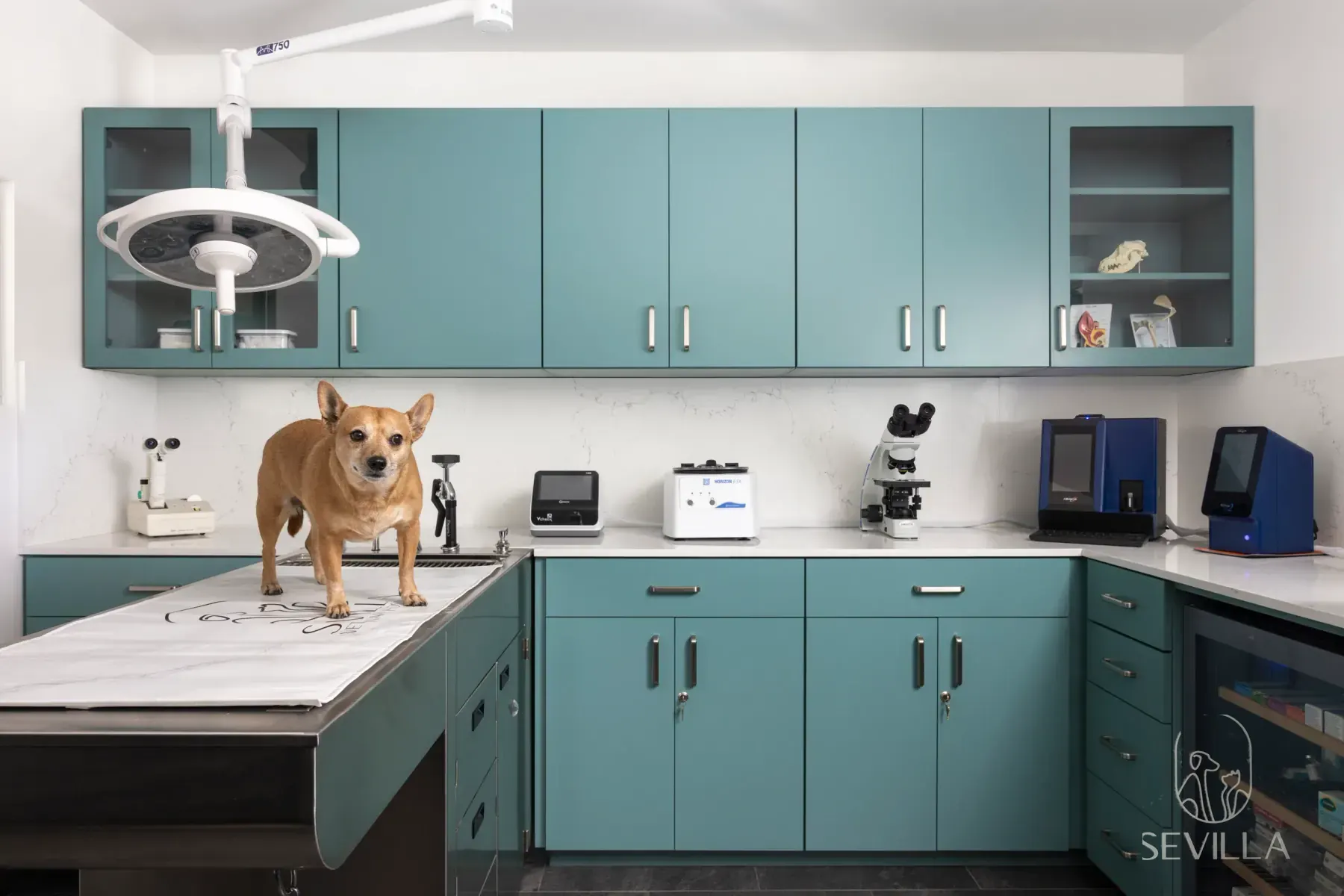
Wide clinical workspace with teal cabinets, microscope, centrifuge and analyzers. A small dog stands calmly on a covered exam table. No endoscopic images or specimens are shown.
Limitations and expectations
- Endoscopy cannot evaluate every organ or every cause of gastrointestinal disease
- Not every foreign body can be retrieved endoscopically
- Biopsies are not always conclusive
- Findings may lead to medical management, further diagnostics, or surgical discussion
- Laparoscopic (key-hole) surgery is a different pathway — see Bulldog key-hole surgery when an abdominal surgical approach is the question
Anesthesia and recovery
General anesthesia is required. Planning for Bulldogs and French Bulldogs considers airway anatomy, body condition, and the procedure itself. Recovery depends on the findings and the individual dog; we do not promise a fixed timeline. Owners preparing for any anesthetic event may also find the anesthesia questions guide useful.
Consultation and referrals
Families can request a Bulldog consultation and share records when available. Veterinarians can use the referral pathway for veterinarians. Learn more about Dr. Antonio Pedraza and the clinical approach. Submitting a form does not determine whether endoscopy is indicated.
Frequently asked questions
What is veterinary endoscopy in this context?
Endoscopy uses a camera on a flexible tube to help visualize parts of the gastrointestinal tract and, when clinically indicated, to obtain small tissue samples. It is one diagnostic tool among several and is not appropriate for every gastrointestinal concern.
When may endoscopy be discussed for Bulldogs?
Discussion may follow persistent vomiting or regurgitation, concern for foreign material, or a need for biopsies after history, examination, and other diagnostics. Suitability is decided after evaluation — not from a form alone.
Does endoscopy replace imaging or laboratory testing?
No. Imaging, laboratory testing, and clinical examination remain important. Endoscopy may complement those steps when the veterinary team decides it can add useful information.
Does endoscopy require anesthesia?
Yes. Endoscopy in dogs requires general anesthesia. Brachycephalic-specific planning is part of how Bulldog and French Bulldog cases are discussed.
Is endoscopy the same as key-hole surgery?
No. Endoscopy is an endoscopic evaluation pathway. Key-hole surgery refers to laparoscopy. One does not automatically replace the other.
Related educational resources
These articles answer common owner questions. They do not replace examination or the consultation details on this service page.
Educational references
External sources are linked for further reading. We do not reproduce their text.
Educational information · Endoscopy. This page does not replace an examination, diagnosis or case-specific treatment plan from a veterinarian.
Ready to plan your bulldog's care?
Request a consultation and our team will follow up to schedule and review records.