BOAS
How to Know if Your Bulldog May Have BOAS
Published 2026-06-01; updated 2026-07-24. Educational resource from Los Angeles Bulldog Vet.
By Dr. Antonio Pedraza, DVM, MVM, cert SAS, MRCVS — Los Angeles Bulldog Vet at Sevilla Veterinary Hospital, Santa Monica.
Owner-observed signs that may suggest Brachycephalic Obstructive Airway Syndrome in Bulldogs, what is not diagnostic alone, and when a veterinary evaluation may help.
- BOAS describes upper-airway narrowing that can affect short-muzzled breeds; severity varies widely between individual dogs.
- Noisy breathing, heat intolerance, and restless sleep are observations to discuss — not a home diagnosis.
- Blue gums or tongue, collapse, or severe breathing struggle need urgent veterinary care.
- A veterinarian builds the picture from history, exam, and, when appropriate, sedated airway assessment.
- Surgery may be discussed for selected patients after examination; it is not automatic and outcomes vary.
Brachycephalic Obstructive Airway Syndrome (BOAS) is a pattern of upper-airway changes that can make breathing harder for dogs with shortened muzzles, including English Bulldogs and French Bulldogs. Not every brachycephalic dog has clinically significant BOAS, and signs can be easy to overlook when they have been present for a long time.
This article is for owners who want to recognize patterns worth mentioning to a veterinarian. It is educational only. It does not diagnose your dog, and it is not a substitute for examination. French Bulldog owners looking specifically for “when to ask” decision framing may also find the companion article on French Bulldog breathing problems useful.
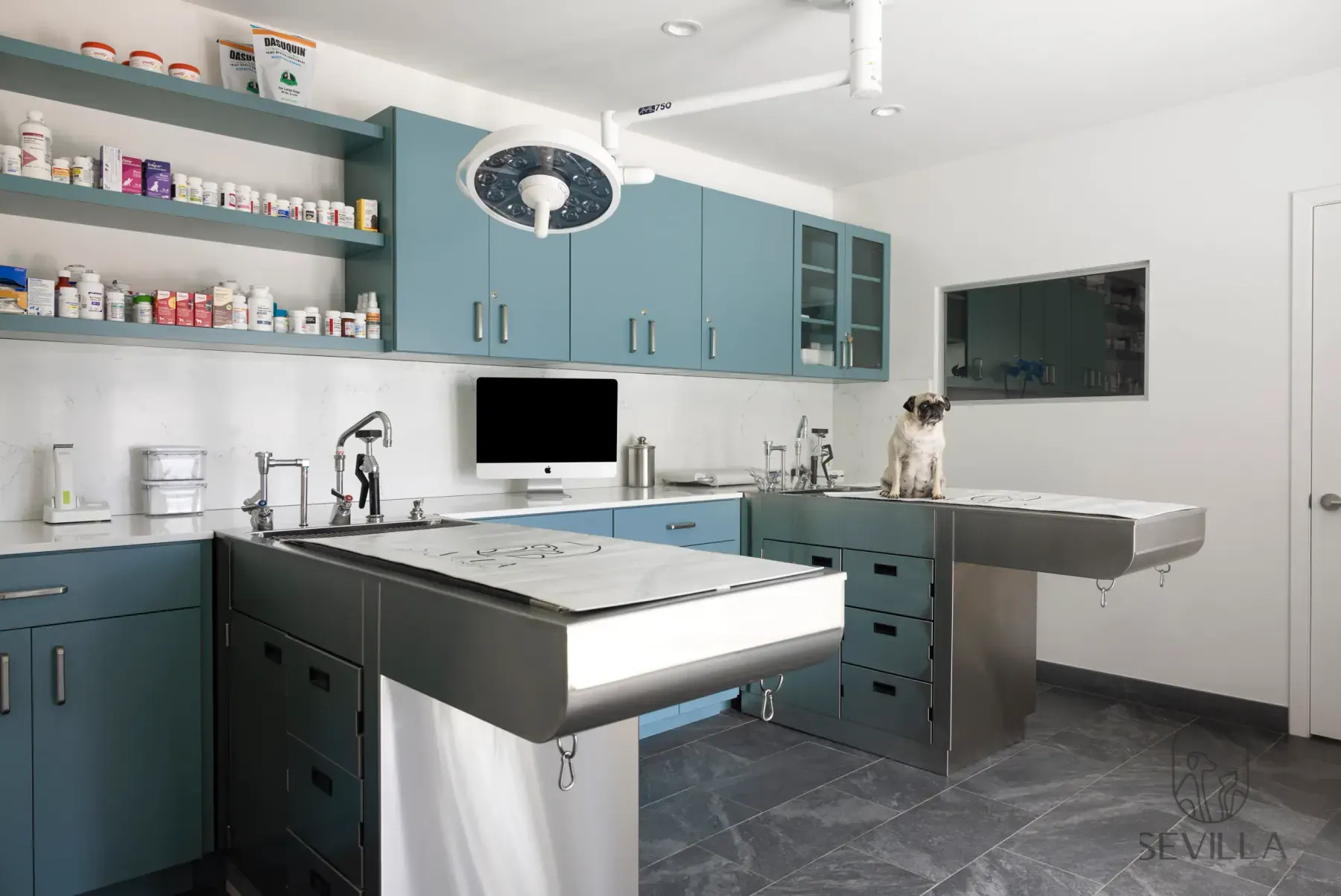
Clinical diagnostic counters with laboratory analyzers and teal cabinetry. No procedure or graphic imagery is shown.
What BOAS means in plain language
“Brachycephalic” means short-headed. In affected dogs, several soft-tissue and conformational features can narrow the path air takes from the nostrils to the windpipe. Common contributors described in veterinary teaching materials include stenotic (narrow) nostrils, an elongated soft palate that can sit in the airway opening, everted laryngeal saccules, and, in some dogs, a relatively narrow trachea.
Individual dogs may have one feature, several, or none that are clinically important. Secondary swelling from chronic effort can make breathing harder over time in some patients. That progression is one reason earlier evaluation can be useful when signs are meaningful — not because every Bulldog needs surgery.
Signs owners may notice
Owners often normalize early signs because similar sounds appear in many Bulldogs. Patterns that are worth discussing with a breed-experienced veterinarian include:
- Noisy breathing at rest, especially snoring or stertor (a low-pitched snoring sound on inspiration)
- Reduced exercise tolerance or slowing on short walks
- Heat or humidity intolerance, with longer recovery after activity
- Restless sleep, frequent position changes, or sleeping with the head elevated
- Gagging, reverse sneezing, or regurgitation around meals or excitement
- Pauses in breathing during sleep that concern you (an observation to share, not a home sleep study)
What these signs are not
A single snore, an occasional reverse sneeze, or noisy breathing after hard play does not, by itself, establish a BOAS diagnosis. Videos and photographs cannot replace a physical examination. Online checklists cannot grade severity for your dog.
Conversely, “my dog has always breathed like that” does not mean the airway is comfortable. The useful question is whether the pattern is limiting activity, sleep, heat tolerance, or quality of life — and whether a veterinarian should examine the airway.
Sleep observations that are worth mentioning
Sleep-related behaviors can help a veterinarian understand airway effort outside the exam room. Patterns owners sometimes notice include head elevation to settle, sitting or standing rest, frequent position changes, and noisy sleep with pauses. Bring short phone videos when you can. These are observations to discuss — not a diagnostic checklist you complete at home.
When to arrange a veterinary examination
Consider a non-urgent evaluation when noisy breathing, exercise limits, heat intolerance, restless sleep, or regurgitation patterns are recurring or worsening. An exam is also reasonable before elective anesthesia so the team can plan airway support with your dog’s anatomy in mind.
When urgent care may be necessary
Seek urgent veterinary care now if your dog is actively struggling to breathe, collapsing, or has blue or pale gums or tongue. Do not wait for a routine appointment in those situations. Heat-related distress in brachycephalic dogs can escalate quickly and should be treated as an emergency concern.
How a veterinarian may evaluate the concern
A consultation typically starts with a detailed history and a physical exam focused on the nostrils, body condition, audible airway noise, and signs that may suggest gastrointestinal involvement. Stenotic nares can often be assessed while awake. Definitive assessment of soft palate length and laryngeal structures generally requires sedation or anesthesia, because a thick tongue makes awake visualization unreliable.
Depending on the dog, additional steps may include neck and chest imaging, discussion of anesthetic risk planning, and, when appropriate, a coordinated look at the airway and upper gastrointestinal tract. No single test confirms clinically important BOAS in isolation; the picture is built from history, exam, and direct visualization when indicated.
Conservative measures that may be discussed
Depending on severity and overall health, a veterinarian may discuss weight management, activity and heat planning, harness instead of collar use when appropriate, and treating concurrent issues that increase respiratory demand. Conservative steps do not replace evaluation when obstruction appears significant, and they do not guarantee improvement.
If evaluation points toward surgery
When narrow nostrils or an elongated soft palate contribute to breathing problems, surgery may be appropriate in selected patients after examination. Soft palate shortening and stenotic nares correction — sometimes described by owners as nose widening — may be discussed together or as part of a broader plan. Surgery is not a guarantee of easier breathing, and individual results and risks vary with anatomy, age, weight, severity, and anesthetic factors.
For local consultation framing rather than educational sign recognition, see the brachycephalic airway surgery service page. Procedure-focused soft palate and nares information lives on its dedicated service page.
Questions to ask the veterinarian
- Which airway features do you see in my dog, and which still need sedated assessment?
- How do weight, heat, and exercise fit into the current plan?
- What are the options if we are not ready to discuss surgery?
- If a procedure is considered, how would anesthesia and recovery be planned for a brachycephalic patient?
- What signs at home should prompt an earlier recheck or urgent care?
Records and videos that may help
- Short clips of breathing at rest, after a short walk, and during sleep
- Notes on heat, exercise limits, regurgitation, and medications
- Prior anesthetic records, imaging, and referral notes when available
Consultation pathway in Santa Monica
Los Angeles Bulldog Vet provides Bulldog-focused veterinary evaluation in Santa Monica. Diagnosis and candidacy for any procedure require examination. Owners and referring veterinarians can request a consultation and share records in advance so the visit can focus on the individual patient.
When to contact a veterinarian sooner
Seek urgent veterinary care now if your dog is actively struggling to breathe, collapsing, or has blue or pale gums or tongue.
What to bring to a consultation
- Records from your primary veterinarian, including prior diagnoses and medications
- Recent lab work, imaging, or referral reports when available
- Short phone videos of breathing, sleep, eye changes, vomiting, or regurgitation if relevant
- A timeline of when signs started, what makes them worse, and what you have already tried
Examinations for Los Angeles Bulldog Vet patients take place at Santa Monica. You can request a consultation or use the referring-veterinarian pathway when another clinic is coordinating care.
Educational references
External sources are linked for further reading. We do not reproduce their text. Access date for link verification: 2026-07-24.
Educational information · BOAS. This page does not replace an examination, diagnosis or case-specific treatment plan from a veterinarian.
Request a focused Bulldog consultation
Share records and concerns. Our team will follow up to schedule an examination in Santa Monica when appropriate.