BOAS
French Bulldog Breathing Problems: When to Ask About BOAS
Published 2026-06-01; updated 2026-07-24. Educational resource from Los Angeles Bulldog Vet.
By Dr. Antonio Pedraza, DVM, MVM, cert SAS, MRCVS — Los Angeles Bulldog Vet at Sevilla Veterinary Hospital, Santa Monica.
A French Bulldog owner’s guide to deciding when noisy breathing, heat intolerance, or exercise limits warrant asking a veterinarian about BOAS evaluation.
- Some airway noise is common in French Bulldogs; progressive limits on walks, sleep, or heat tolerance are reasons to ask about evaluation.
- Asking about BOAS is a conversation with a veterinarian — not a decision that every Frenchie needs surgery.
- Los Angeles heat and humidity can unmask airway effort that seems mild indoors.
- Bring videos of sleep and recovery breathing to make the appointment more useful.
- Urgent signs such as collapse or blue gums need emergency care, not a wait-and-see approach.
Snorting, snoring, and a little noisy breathing are so common in French Bulldogs that many owners assume the sounds are simply “how Frenchies are.” Some of that noise can be within a comfortable range for an individual dog. Some of it can be an early signal that Brachycephalic Obstructive Airway Syndrome (BOAS) deserves a veterinary conversation.
This article focuses on decision timing for French Bulldog owners: when to ask about evaluation. For a broader Bulldog-oriented overview of signs and what an exam may include, see How to Know if Your Bulldog May Have BOAS. Neither article diagnoses your dog.
Why French Bulldogs are often in this conversation
French Bulldogs are a brachycephalic breed. Shortened muzzle conformation can be associated with narrow nostrils, soft-tissue crowding in the throat, and other upper-airway features that increase the work of breathing in some dogs. Severity ranges from mild to life-limiting. Breed alone does not determine whether surgery is appropriate.
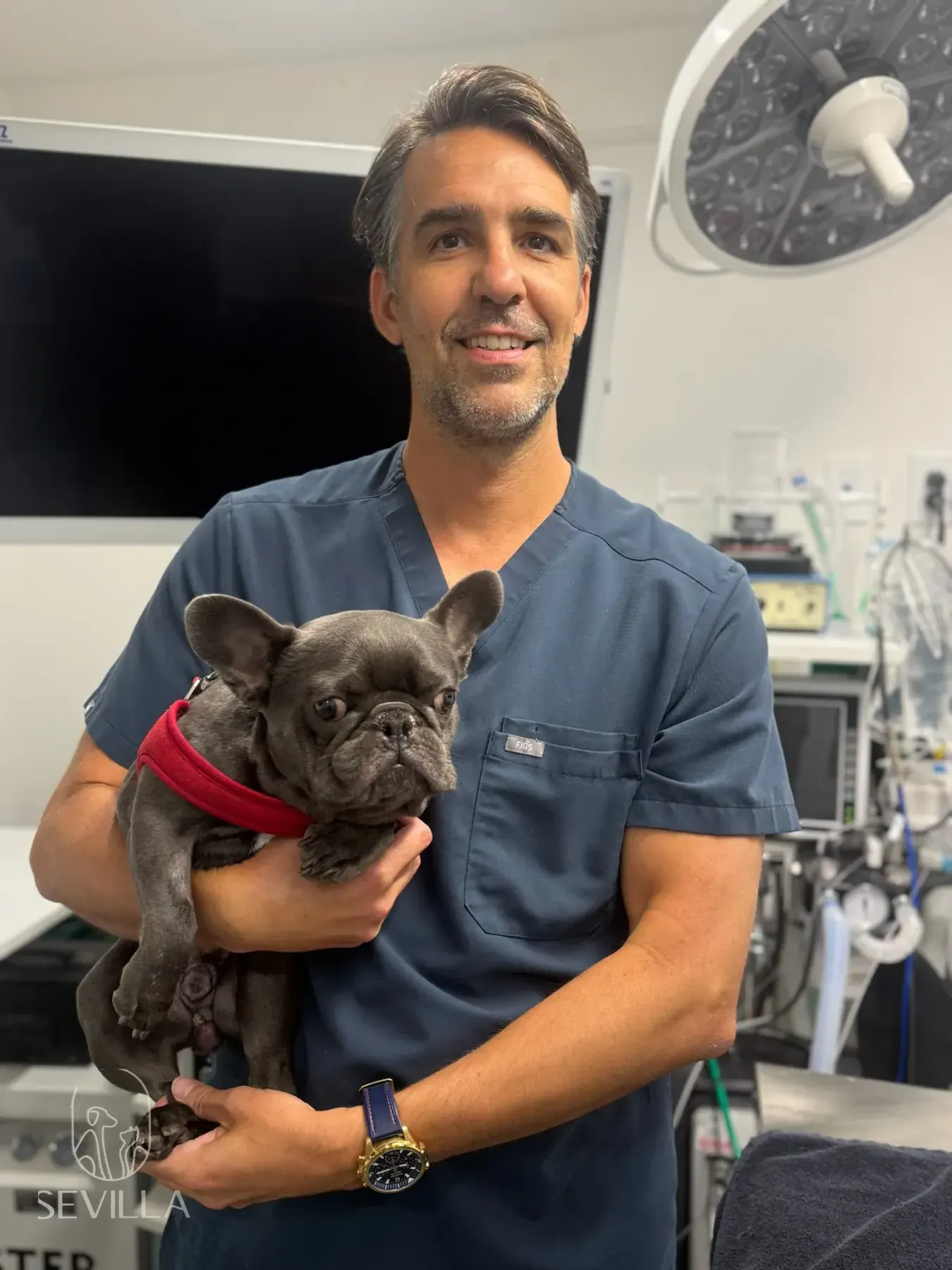
A clinician in dark scrubs stands in a treatment room holding a small French Bulldog wearing a red harness. Clinical monitors and a surgical light are visible in the background.
Patterns that usually warrant asking
Use these patterns as conversation prompts for your veterinarian, not as a scoring system:
- Snoring loud enough to wake the household, or apparent pauses in breath during sleep
- Sleeping in unusual positions that seem to keep the airway open
- Slowing on short walks, especially in warm Southern California weather
- Recovery breathing that lasts longer than it used to after mild activity or excitement
- Gagging or regurgitation, especially after activity or meals
- Avoiding stairs, play, or outings that the dog previously enjoyed
When “normal Frenchie noise” may still be enough for now
If your French Bulldog is active, comfortable in ordinary household temperatures, sleeps quietly enough that you are not concerned, and recovers quickly after mild exercise, a routine wellness visit is still a good place to mention airway sounds. You do not need to assume a surgical path. You do need an honest baseline so changes are easier to spot later.
If elective anesthesia is planned for another reason, ask how the team will account for brachycephalic airway anatomy even when day-to-day noise seems mild.
Heat, humidity, and Los Angeles daily life
Short-muzzled dogs can be at higher risk for heat-related emergencies. Warm sidewalks, parked cars, mid-day walks, and poorly ventilated indoor spaces can increase respiratory demand. If your French Bulldog’s noise or effort spikes with heat, treat that as clinically useful information for your veterinarian and adjust outing timing while you arrange evaluation.
What asking about BOAS can look like at the appointment
A practical visit often includes your videos, a body-condition assessment, nostril examination, listening to airway noise, and a discussion of next steps. Those steps may range from monitoring and lifestyle changes to imaging or a sedated airway exam when clinically appropriate. The goal is a clear plan for your dog — not a one-size protocol for every French Bulldog.
Urgent signs — do not wait to “ask later”
Seek urgent veterinary care if your dog is struggling to breathe, collapsing, overheating with marked distress, or showing blue or pale gums or tongue. Those situations are emergencies.
Questions French Bulldog owners can bring
- Based on what you see today, is my dog’s airway noise within a comfortable range or worth further assessment?
- What heat and exercise limits would you set for this individual patient?
- If we proceed to a sedated airway exam, what are we hoping to learn?
- How would you weigh monitoring versus procedural options for this dog right now?
Local next step
If you want a Bulldog-focused evaluation in the Los Angeles area, Los Angeles Bulldog Vet sees patients in Santa Monica. Request a consultation, share records, and bring videos. Surgical candidacy, when discussed at all, is decided only after veterinary assessment.
When to contact a veterinarian sooner
Seek urgent veterinary care now if your dog is actively struggling to breathe, collapsing, or has blue or pale gums or tongue.
What to bring to a consultation
- Records from your primary veterinarian, including prior diagnoses and medications
- Recent lab work, imaging, or referral reports when available
- Short phone videos of breathing, sleep, eye changes, vomiting, or regurgitation if relevant
- A timeline of when signs started, what makes them worse, and what you have already tried
Examinations for Los Angeles Bulldog Vet patients take place at Santa Monica. You can request a consultation or use the referring-veterinarian pathway when another clinic is coordinating care.
Educational references
External sources are linked for further reading. We do not reproduce their text. Access date for link verification: 2026-07-24.
Educational information · BOAS. This page does not replace an examination, diagnosis or case-specific treatment plan from a veterinarian.
Request a focused Bulldog consultation
Share records and concerns. Our team will follow up to schedule an examination in Santa Monica when appropriate.