BOAS
BOAS Surgery Recovery in Bulldogs: 7 Essential Steps for Safe Healing
Published 2026-08-25. Educational resource from Los Angeles Bulldog Vet.
By Dr. Antonio Pedraza, DVM, MVM, cert SAS, MRCVS — Los Angeles Bulldog Vet at Sevilla Veterinary Hospital, Santa Monica.
BOAS surgery recovery in Bulldogs: the first 24 hours, feeding, a day-by-day timeline, warning signs, and why your surgical team's plan always comes first.
- BOAS surgery recovery in most dogs centers on about two weeks of strict rest, with the fuller benefit of surgery emerging over six to twelve weeks as swelling resolves.
- Patients undergoing BOAS surgery at Sevilla Veterinary Hospital are typically hospitalized for one to two nights afterwards, so breathing can be monitored closely for any abnormality.
- Your surgical team's discharge instructions always take precedence over any general guide, including this one.
- Post-surgical swelling can make breathing temporarily noisier before it settles; knowing what to watch for matters more than any fixed timeline.
- Struggling to breathe, blue or gray gums, collapse, or repeated regurgitation after surgery are emergencies — seek urgent veterinary care immediately.
What to expect after BOAS surgery
BOAS surgery recovery in Bulldogs and French Bulldogs typically involves about two weeks of strict rest, soft food, and close monitoring, followed by a gradual return to activity guided by recheck examinations. Breathing may sound louder for the first days while swelling settles, and the fuller benefit of surgery usually emerges over six to twelve weeks.
That summary describes the pattern most commonly discussed with owners — it is not a promise, and it is not a substitute for your own discharge sheet. Every plan below is educational; the plan for your dog is set by the veterinary team who examined and operated on your dog. For how the procedures themselves are chosen, see soft palate and stenotic nares surgery for bulldogs.
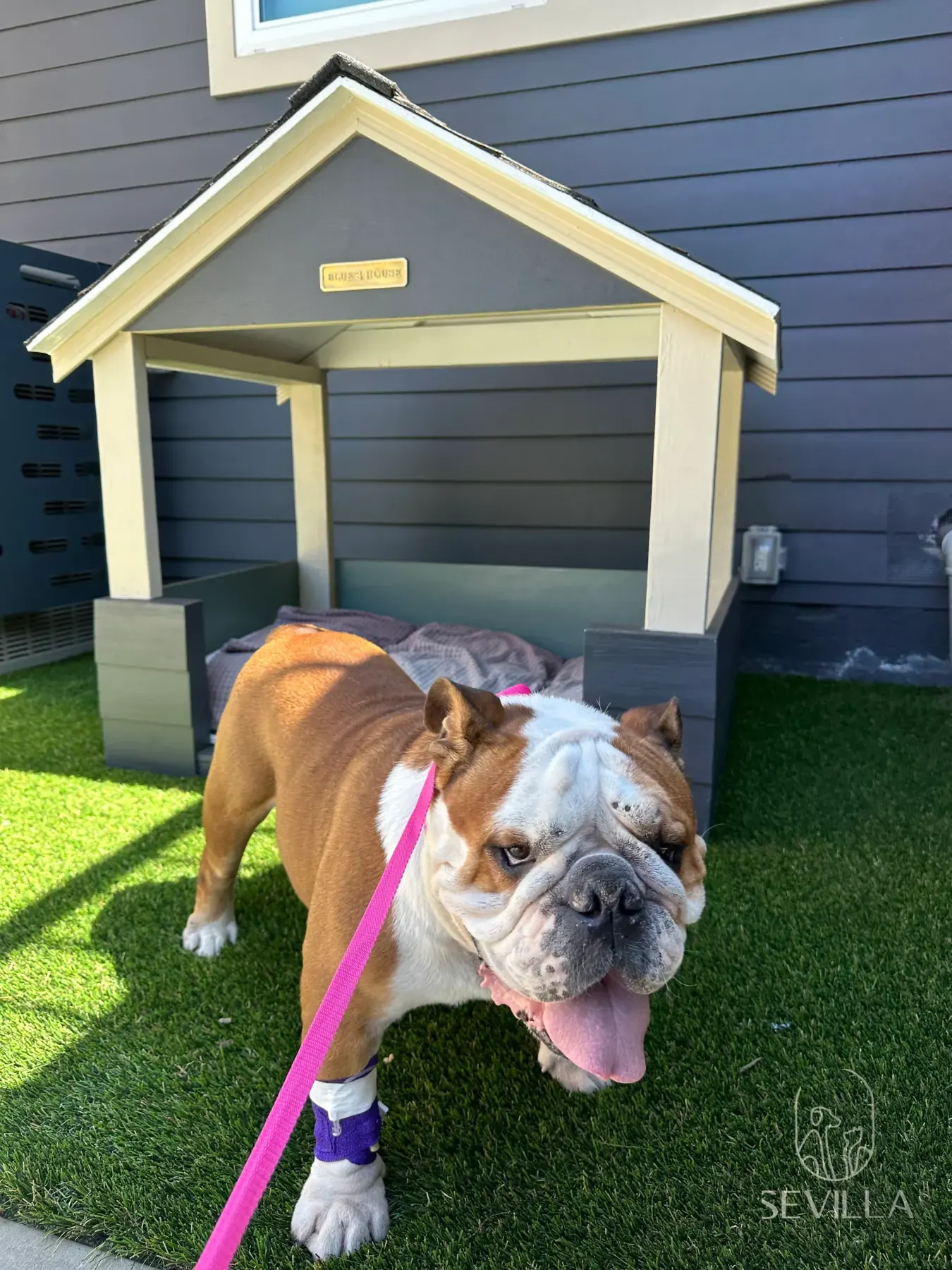
A fawn-and-white English Bulldog stands on green turf outside a clinic building, wearing a pink leash, with a bandaged front leg visible. The expression is alert and relaxed rather than distressed.
BOAS surgery recovery timeline: day by day
The table below shows how BOAS surgery recovery is commonly structured in Bulldogs, French Bulldogs, and Pugs. Individual timelines vary with the procedures performed, the dog's anatomy, and how tissues heal — your team's recheck findings, not the calendar, decide each transition.
| Stage | What is commonly happening | What owners usually do |
|---|---|---|
| Day 0 (surgery day) | Surgery, then close in-hospital monitoring — patients typically stay one to two nights so the airway is watched continuously | Drop off between 8:00 and 9:00 AM; prepare a quiet, cool room at home ready for discharge day |
| Days 1–3 | Swelling peaks. Much of this window is usually spent hospitalized, with discharge once the airway is settled | Once home: strict rest, small soft meals as instructed, leash-only bathroom breaks, watch breathing effort |
| Days 4–7 | Swelling usually begins to settle; energy often starts returning | Keep rest strict even if your dog feels better; continue soft food unless told otherwise |
| Week 2 | Many teams schedule a recheck; nares sutures are often dissolvable or assessed at this visit | Attend the recheck; ask before changing food, activity, or medications |
| Weeks 3–6 | Gradual, supervised return to short walks if the recheck supports it | Increase activity slowly; avoid heat, excitement, and rough play |
| Weeks 6–12 | Tissues mature; the fuller effect of the surgery on daily breathing usually becomes clearer | Maintain weight, heat, and harness habits — they protect the result long term |
Why bulldog airway recovery is different
Recovery after airway surgery is not the same as recovery after a routine procedure. In brachycephalic dogs the airway is already narrow, so post-surgical swelling has less margin than it would in a longer-muzzled breed. That is why BOAS surgery recovery planning starts before surgery: anesthetic choices, recovery positioning, and monitoring are all shaped by the breed's anatomy.
The scale of the issue is breed-wide. In a 2025 study published in Frontiers in Veterinary Science, French Bulldogs alone accounted for 53.75% of the dogs undergoing BOAS surgery in the reviewed caseload — a reminder that airway recovery is now one of the most common surgical recoveries bulldog families manage at home.
Preparing your home before surgery day
A calm recovery starts before the drop-off. Surgical drop-off at Sevilla Veterinary Hospital is scheduled Monday to Friday between 8:00 and 9:00 AM, and arriving with the home side already prepared removes stress from the day itself.
- A quiet, cool rest area away from stairs, other pets, and foot traffic
- A well-fitted harness ready — not a neck collar
- Soft food your team has approved, portioned for small meals
- Clinic and nearest emergency hospital numbers saved in your phone
- Your phone ready to record short videos of anything that concerns you
- Someone home for the first day and night if at all possible
The first 24 to 48 hours: monitored in hospital
After BOAS surgery at Sevilla Veterinary Hospital, patients are typically kept in hospital for one to two nights. Recovery from anesthesia is the window in which a brachycephalic airway is most vulnerable, and continuous observation means swelling, breathing effort, or any abnormality can be identified and addressed immediately rather than discovered at home.
Discharge follows the airway, not the clock: your dog goes home when the team is satisfied with how breathing is behaving, and home-care instructions are reviewed with you at that point.
Once home, most discharge plans emphasize a quiet, cool, calm space away from stairs, other pets, and excitement. Water and food are usually reintroduced gradually and only as instructed — swallowing can be temporarily uncomfortable after palate surgery, and rushing food can trigger gagging or regurgitation.
Panting, whining, and restlessness after anesthesia
Owners often search for why a dog is panting or whining after surgery. As anesthesia and pain-control medications wear off, some dogs are restless, vocal, or briefly disoriented — and in many dogs that settles with quiet time. How long anesthetic effects last varies with the medications used and the individual dog; your discharge sheet describes what to expect for yours.
In a brachycephalic dog, however, panting deserves more respect than in other breeds, because panting is also how dogs move air when breathing is harder. If panting is persistent or worsening, or comes with louder breathing effort, gum-color changes, or distress, call Sevilla Veterinary Hospital — or email us — rather than waiting it out.
How should I feed my dog after BOAS surgery?
Feeding after BOAS surgery usually means soft or softened food, offered in small portions, for as long as your surgical team advises — commonly around the first two weeks. Many teams suggest shaping soft food into small, meatball-sized portions that are easy to swallow, and supervising your dog quietly for a period after each meal.
The reason is mechanical: the soft palate and throat are healing, and in some brachycephalic dogs strong airway effort is linked with reflux and regurgitation. Calm, small, frequent meals put less pressure on healing tissue than one large, excited feeding. If your dog gags, regurgitates repeatedly, or refuses water, call Sevilla Veterinary Hospital promptly instead of experimenting with foods.
When can my dog exercise after BOAS surgery?
Exercise after BOAS surgery is typically restricted to short, calm, leash-only bathroom breaks for about the first two weeks, with longer walks reintroduced gradually only after a recheck supports it. Running, jumping, stairs, rough play, and off-leash time usually wait until your team clears them.
A harness is generally preferred over a neck collar during airway recovery, because pressure on the throat is exactly what a healing airway does not need. Heat and excitement are the other two things to manage carefully — both increase breathing effort, and both are easier to prevent than to calm down.
Does my dog need a cone after BOAS surgery?
Many surgical teams recommend a protective cone or soft e-collar if a dog paws or rubs at the nose after stenotic nares surgery, since the nostril incision lines carry fine sutures while they heal. Whether your dog needs one, and for how long, is a decision your team makes based on the procedures performed and your dog's behavior — follow their instruction rather than a general rule.
What is normal — and when should I call the vet?
Some findings are a common part of an uneventful BOAS surgery recovery, others deserve a same-day call, and a few are emergencies. The table below is a general triage guide — when in doubt, call Sevilla Veterinary Hospital or email us. No owner has ever been criticized for checking.
| Usually expected early on | Call Sevilla Veterinary Hospital promptly | Emergency — urgent care now |
|---|---|---|
| Slightly noisier breathing in the first days while swelling settles | Breathing effort that worsens instead of settling after the first days | Struggling to breathe, or blue or gray gums or tongue |
| Mild tiredness and a reduced appetite on the first day | Repeated regurgitation or vomiting, or refusal of water | Collapse, or severe and unrelenting distress |
| Small amounts of blood-tinged saliva or nasal crusting very early, if your team said to expect it | Marked lethargy, or anything that simply worries you | Continuous retching or an airway that sounds progressively obstructed |
What are the risks of BOAS surgery?
Airway surgery carries real risk, and honest recovery planning acknowledges it. In a 2026 multi-institutional study published in the Journal of the American Veterinary Medical Association covering 413 dogs across four hospitals, short-term major complications occurred in 15.5% of dogs. Reported complication and mortality rates in the recent veterinary literature vary between studies and surgical techniques.
Those numbers are population statistics from published research, not predictions for any individual dog — and they are exactly why careful patient selection, brachycephalic-specific anesthesia, and structured recovery monitoring matter. They are also why this guide keeps repeating one instruction: when something looks wrong during BOAS surgery recovery, call early.
Rechecks and long-term management
Airway surgery is one part of a longer plan. Weight management, heat awareness, and harness use typically continue well after the incisions have healed, because they reduce the load on the airway every day. Recheck examinations let your team confirm healing and adjust the plan instead of guessing.
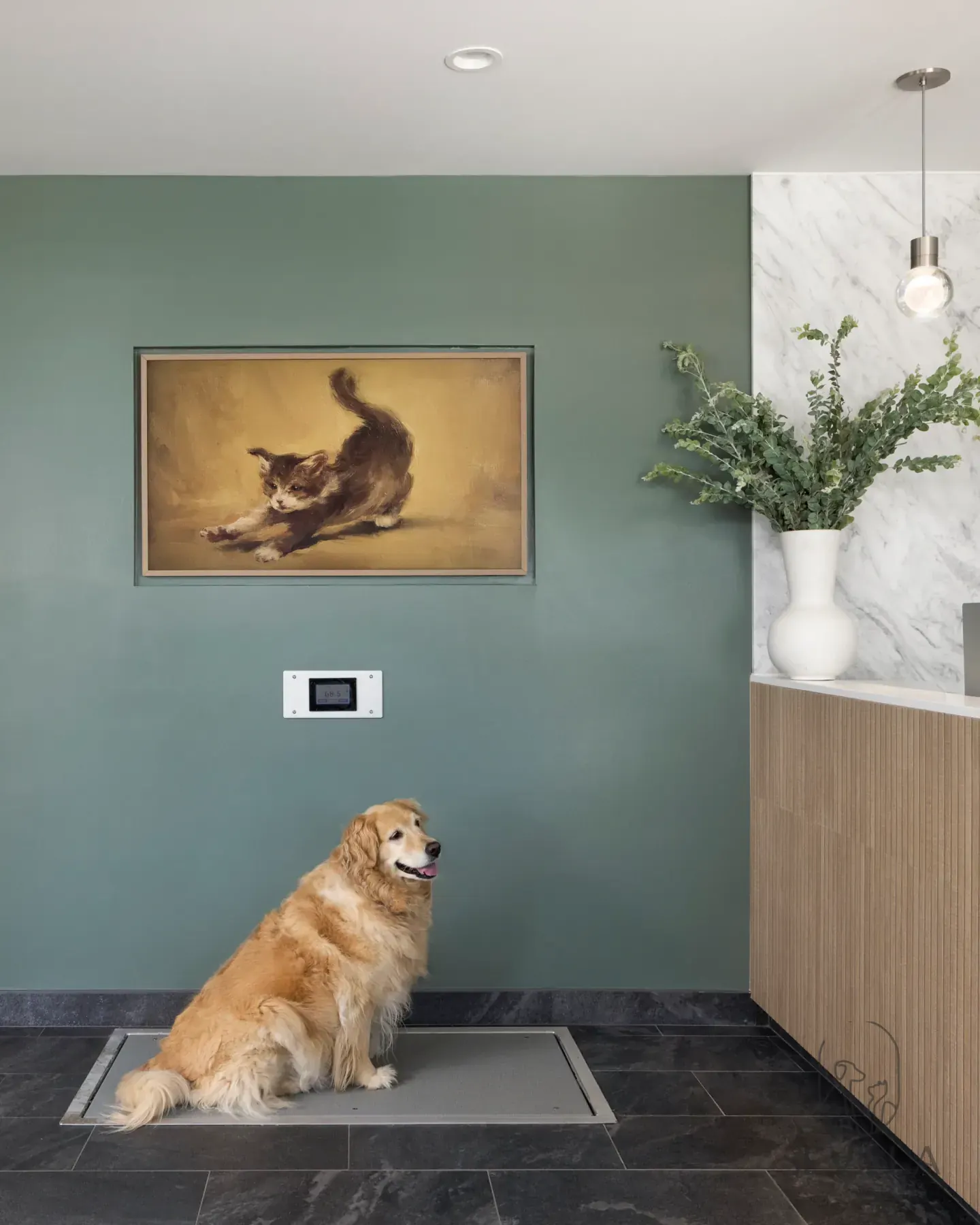
Interior view of a clinic lounge with a floor scale, seating and soft daylight. Conveys a calm arrival experience for referred patients.
How long does it take a dog to recover from BOAS surgery?
Most dogs need about two weeks of strict rest after BOAS surgery, with a gradual return to normal activity over the following weeks and the fuller benefit of surgery emerging over six to twelve weeks. Individual recovery varies with the procedures performed, the dog's anatomy, and healing — your surgical team's rechecks set the real timeline.
Will my dog stop snoring after BOAS surgery?
Not necessarily. Surgery aims to improve airflow through specific parts of the airway; it does not give a brachycephalic dog a non-brachycephalic airway, and some noise or snoring may remain. Many owners report quieter breathing after appropriately selected surgery, but no outcome is guaranteed, and expectations are discussed honestly before any procedure.
Does BOAS surgery cure the condition permanently?
BOAS surgery addresses individual components of the syndrome — most commonly narrow nares and an elongated soft palate — rather than curing brachycephalic anatomy itself. That is why long-term weight, heat, and lifestyle management continue after healing, and why some dogs are re-evaluated later in life if signs change.
Does my dog stay overnight after BOAS surgery?
Yes. At Sevilla Veterinary Hospital, patients undergoing BOAS surgery are typically hospitalized for one to two nights so that breathing, swelling, and recovery from anesthesia can be monitored closely for any abnormality. Discharge happens once the team is satisfied with how the airway is behaving, and the plan for each patient is confirmed with you before the procedure.
Recovery support in Santa Monica
Los Angeles Bulldog Vet patients recover under a plan set at Sevilla Veterinary Hospital in Santa Monica, with rechecks scheduled as part of discharge. If your dog had airway surgery elsewhere and you want a breed-focused follow-up examination, you can request a consultation. Referring veterinarians coordinating shared airway cases can use the referral pathway.
When to contact a veterinarian sooner
Seek urgent veterinary care now if your dog is actively struggling to breathe, collapsing, or has blue or pale gums or tongue.
What to bring to a consultation
- Records from your primary veterinarian, including prior diagnoses and medications
- Recent lab work, imaging, or referral reports when available
- Short phone videos of breathing, sleep, eye changes, vomiting, or regurgitation if relevant
- A timeline of when signs started, what makes them worse, and what you have already tried
Examinations for Los Angeles Bulldog Vet patients take place at Santa Monica. You can request a consultation or use the referring-veterinarian pathway when another clinic is coordinating care.
Educational references
External sources are linked for further reading. We do not reproduce their text. Access date for link verification: 2026-07-24.
Educational information · BOAS. This page does not replace an examination, diagnosis or case-specific treatment plan from a veterinarian.
Request a focused Bulldog consultation
Share records and concerns. Our team will follow up to schedule an examination in Santa Monica when appropriate.